How to Select the Right Thermal Circuit Breaker Based on Equipment Load Characteristics
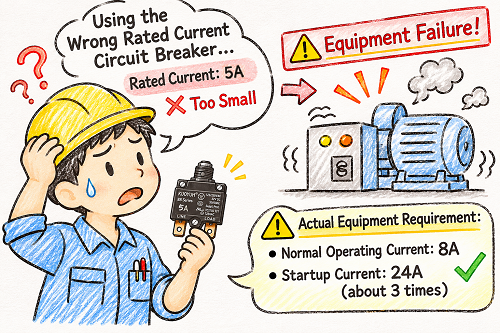
Selecting the right thermal circuit breaker involves more than simply matching the breaker's rated current to the equipment's operating current. Understanding the actual load characteristics is equally important.
For OEM manufacturers and electrical engineers, two devices with the same operating current may require different circuit breakers due to variations in inrush current, operating duration, and ambient temperature.
Proper circuit breaker selection helps prevent nuisance tripping, avoid insufficient protection, and improve equipment reliability.
Understanding Four Key Current Characteristics
Before selecting a thermal circuit breaker, engineers should understand how electrical current behaves during startup, normal operation, and overload conditions:
| Current Characteristic |
Description |
Selection Consideration |
| Rated Current | The breaker's designated current rating under specified conditions | Ensure compatibility with equipment load and protection requirements |
| Operating Current | Current drawn during normal equipment operation | Evaluate normal load and current variations |
| Inrush Current | Temporary high current occurring during startup | Prevent unnecessary tripping during normal startup |
| Continuous Overload | Current exceeding normal operating levels for an extended period | Ensure adequate protection against sustained overload |
Thermal circuit breakers generally have inverse time-current characteristics, meaning that higher overload currents typically result in shorter tripping times.
Therefore, engineers should review the manufacturer's time-current trip curves, rather than relying solely on amperage ratings.
Why Equipment with the Same Operating Current May Need Different Circuit Breakers?
Consider two devices that both operate at 10A but have different load characteristics.
| Comparison | Motor-Driven Equipment | Continuously Operating Power Equipment |
| Normal Operating Current | 10A | 10A |
| Load Characteristics | High current may occur during startup | Relatively stable current over extended periods |
| Main Considerations | Startup current and duration | Continuous loading, heat dissipation, and ambient temperature |
| Selection Focus | Ensure the trip curve can tolerate normal startup current | Evaluate thermal performance under continuous operation |
| Potential Risks | Nuisance tripping during startup | Premature tripping due to temperature effects or insufficient protection |
Motor-Driven Equipment: Motors used in pumps, compressors, and industrial machinery may draw several times their normal operating current during startup. Engineers should ensure the circuit breaker's trip characteristics can tolerate these temporary current surges without unnecessary tripping.
Continuously Operating Equipment: Power supplies, industrial controllers, and power distribution systems require careful consideration of continuous loading, enclosure ventilation, and ambient temperature. Heat accumulation may influence the breaker's tripping behavior.
The key takeaway: The same operating current does not necessarily mean the same circuit protection requirements.
Five Key Factors When Selecting a Thermal Circuit Breaker
Beyond load characteristics, OEM engineers should evaluate five essential factors during equipment development.
- AC Rated Current: Select an appropriate current rating based on normal operating current, expected load variations, and applicable derating requirements. An underrated breaker may cause nuisance tripping, while an oversized breaker may provide insufficient protection.
- Inrush Current: For motors, transformers, and other equipment with startup surges, evaluate both the peak inrush current and its duration to avoid unnecessary tripping.
- Trip Characteristics: Different thermal circuit breakers have different time-current trip characteristics. Engineers should review product datasheets and trip curves to ensure compatibility with the equipment's load profile.
- Rated Voltage: Verify that the circuit breaker is suitable for the equipment's AC or DC voltage requirements and has adequate interrupting capacity for the prospective fault current.
- Ambient Temperature and Installation Conditions: Ambient temperature, enclosure size, ventilation, and nearby heat sources may affect the breaker's tripping performance. These conditions should be considered during selection.
How Can OEM Engineers Avoid Circuit Breaker Selection Mistakes?
During product development, engineers should first identify the equipment's normal operating current, startup current, and continuous loading conditions.
Next, compare the rated current, rated voltage, and trip characteristics of different circuit breakers.
It is also important to review the manufacturer's datasheets, product certifications, and application limitations, followed by testing under actual equipment operating conditions. Circuit breaker selection should go beyond amperage. The breaker's electrical and thermal characteristics must match the equipment's real operating requirements.
Conclusion: Find the Right Circuit Protection Solution for Your Equipment
Selecting the right thermal circuit breaker starts with understanding equipment load characteristics. Whether protecting motor-driven equipment with high inrush current or power systems requiring continuous operation, engineers must carefully evaluate rated current, trip characteristics, and actual operating conditions.
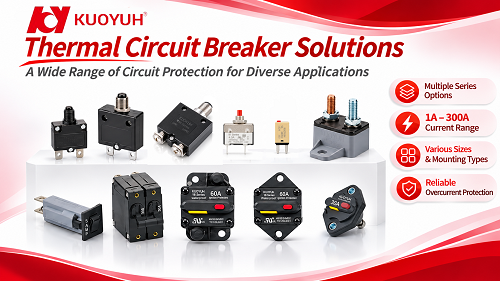
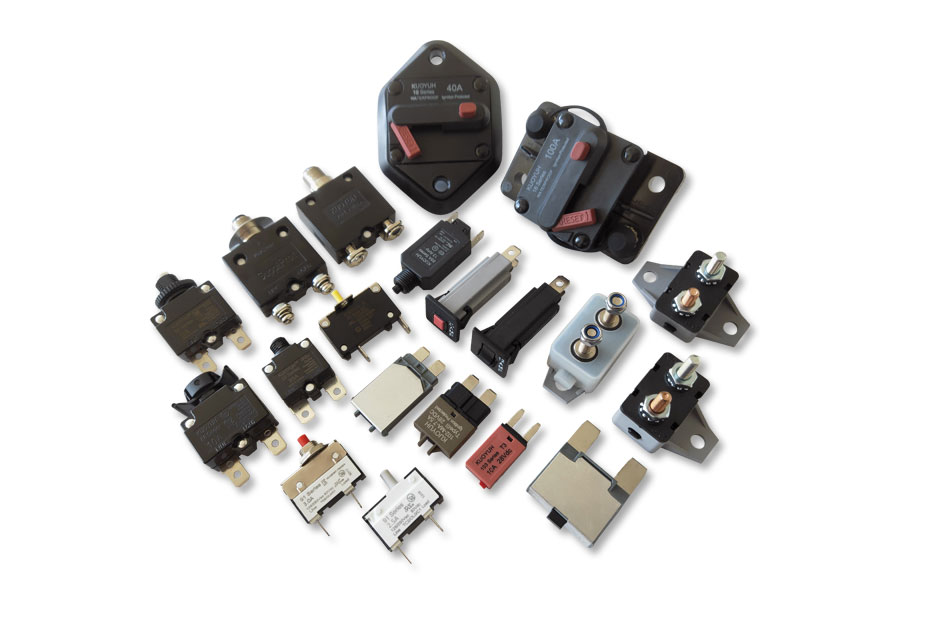
KUOYUH offers a wide range of thermal circuit breakers with current ratings from 1A to 300A, available in various sizes, designs, and mounting configurations. From compact electronic devices and power supplies to industrial machinery and high-current electrical systems, KUOYUH is committed to providing reliable circuit protection solutions for OEM manufacturers and electrical engineers.
Reliable circuit protection starts with understanding your equipment's load characteristics.
Contact KUOYUH to explore our product range and technical specifications. Let us help you find the right thermal circuit breaker for your equipment design and application needs.